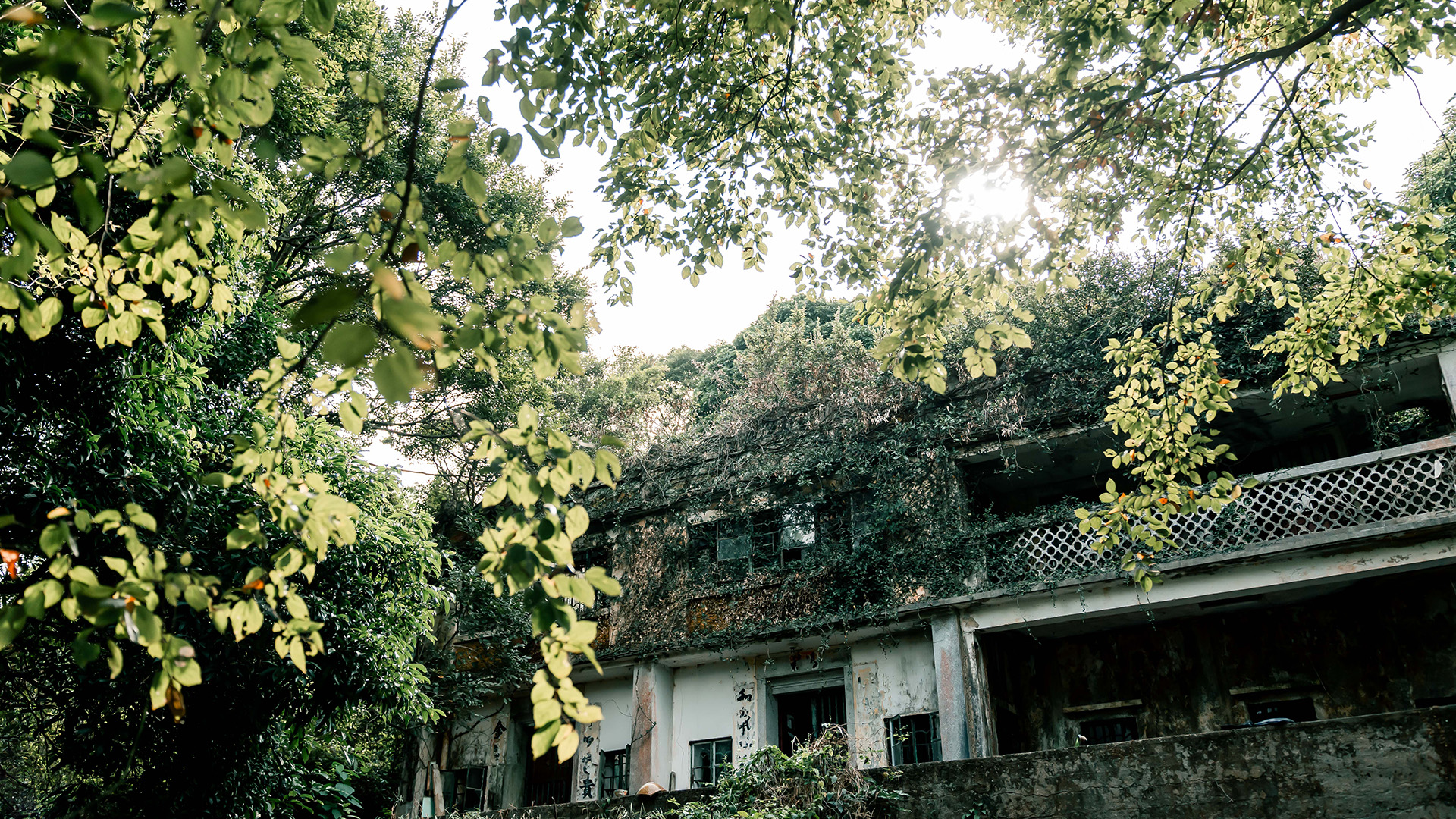
Situated in the scenic Sha Tau Kok, the 350-year-old Hakka village of Yung Shue Au stands as a quiet testament to Hong Kong's rich rural heritage. However, like many such villages, the industrialisation of the 1960’s drew most of its residents to the city or overseas. As one villager noted recently, "At the end of the day, we were born here… Even though we’ve left, we still dream about coming back." And this deep-seated connection is the heartbeat of an ambitious new revitalisation project, a collaborative effort between the Wu Zhi Qiao (WZQ) Charitable Foundation and Hong Kong’s Chinachem Group.
The project's centrepiece is the restoration of the century-old Heung Heung Mansion, which will be transformed into a multi-purpose communal hub and heritage "story house." This initiative builds on the successful model of the nearby Lai Chi Wo Story Room, also supported by Chinachem. The aim is not merely to restore bricks and mortar, but to rekindle the village's spirit. Professor Zhang Hong of Tsinghua University, a key academic partner, encapsulates the vision: to "bring new life and vitality to this village," attracting both indigenous people and new villagers to return and revitalise it.
Chinachem Group's involvement is strategic, and purpose driven. Amy Wu, Director of Corporate Communications at Chinachem Group emphasised, "Chinachem has always placed great importance on rural conservation," believing firmly that "the younger generation plays a crucial role in the journey towards sustainable development."
By funding this WZQ project, Chinachem is empowering a youth-led movement: a collaboration between architecture students from Tsinghua University, Beijing, and The Chinese University of Hong Kong. Behaving as a real-world platform to apply their skills, a Tsinghua student involved in the project highlighted this knowledge transfer, observing that Chinachem has "a lot of resources and knowledge in Green Building," experience directly relevant to the programme participants.
The challenges are significant, with the village currently in a primitive state, lacking water and electricity. Yet, it’s precisely this "start from scratch" scenario which makes the corporate support so vital. As one project member observed, “in rural development it is very rare to receive sponsorship… but Chinachem Group have led by example."
Ultimately, this is more than a conservation project; it is an investment in sustainable community, cultural preservation, and youth empowerment. By bridging the gap between city and countryside, the revitalised Heung Heung Mansion is poised to become a beacon of how corporate responsibility, academic expertise, and community passion can unite to write a new, vibrant chapter for Hong Kong's historical villages.